Showing posts with label Blogs. Show all posts

Wednesday, August 20, 2014

Using Blog Post As Evidence Is Fair Use; Not Prohibited Copyright Violation

A blog post can be used in its entirety as evidence without violating the author's copyright. That's the ruling of the United States District Court in Northern Illinois in the case of Denison v. Larkin.

The case came up in an unusual fashion. Denison, an Illinois attorney, was charged with a disciplinary offense for scathing posts accusing the Cook County Illinois Probate Court and its guardian ad litem of corruption, elder abuse, and taking action that physically and emotionally harmed her 90-year-old Mary Sykes.

Denison was charged with violating the Code of Professional Conduct by her accusations. Setting aside the First Amendment issue (which is substantial), Denison challenged the action by suing her accusers in federal court for violating her copyright by utilizing the entirety of her blog post in the disciplinary complaint.

Judge Amy J. St. Eve of the Northern District of Illinois had no problem finding for the defendants and dismissing Denison's complaint.  The Court discussed the touchstones for determining whether something falls within fair use:  The purpose and character of the use; the nature of the work; the amount of the work used; and the market effect.  The court found that under the facts of the case, each of these factors favored the defendants.

Perhaps more importantly, the court noted that in enacting the Copyright law, the House Judiciary Committee stated that "reproduction of a work in legislative or judicial proceedings or reports" is fair use. Further, the U.S. Seventh Circuit (the circuit in which Illinois is located) has held that "reproducing copyrighted works for litigation is an example of the fair use doctrine."

So when you write that blog, remember that it could someday be labeled Exhibit A.

Friday, January 24, 2014

Writing Blog Can Get You Thrown in Jail -- At Least in Alabama

Alabama blogger Roger Shuler has been sitting in the Shelby County, Alabama Jail for five
months -- for blogging.  According to the Committee to Protect Journalists, he is the only person in the Western Hemisphere imprisoned for something he has written.

Now Mr. Shuler isn't your ordinary blogger.  He has repeatedly been involved in legal battles and sued for defamation since he started his blog in 2007.  Initially the blog was an outlet for a property dispute with his neighbor.  Mr. Shuler ended up on the short end of the case, and the neighbor's lawyer now owns half of Mr. Shuler's home.

Shuler continued to rant against courts, the police and a variety of public officials, including Alabama Governor Bob Riley. Example: writing that a sitting federal judge appeared in a gay pornographic magazine. Class guy, this Mr. Shuler.

He has repetitively been sued for his blog posts, often successfully.  The judgments against him have taken their financial toll, to the point where he no longer can afford internet service and now posts from public computers in public libraries. But he continues undeterred.

Fast forward to an article Shuler posted claiming that the governor's son, Robert Riley Jr., got aptly named lobbyist Liberty Duke pregnant and paid for an abortion.  Riley and Duke not only denied the pregnancy and abortion, they denied they had ever been alone together in the same room.

Here's were things get really interesting -- and according to many First Amendment scholars and lawyers -- a bit out of hand.  State District Judge Robert Jackson issues an injunction against Shuler prohibiting him from making anymore "defamatory statements" about Mr. Riley and Ms. Duke.

First Amendment experts are unanimous that the order was unconstitutional and a violation of Mr. Shuler's First Amendment rights.

Ignoring the games Mr. Shuler played trying to avoid service of the order, Mr. Shuler continued to   publish venomous posts about the pair. 

The result:  Judge Jackson held Shuler in contempt and ordered him jailed.

That was in October.  And Mr. Shuler is still there.

Clearly Mr. Shuler is not the good guy here.  He has abused his rights.  He has defamed people causing them personal pain and suffering all for his own small-minded baseless vendettas.  But on the other hand, he is in jail because of an unconstitutional judicial order prohibiting free speech.

It's all ugly, and shows no signs of getting resolved.  And meanwhile, Mr. Shuler sits in a United States jail for what he wrote.

photo credit: <a href="http://www.flickr.com/photos/stillburning/46446926/">Still Burning</a> via <a href="http://photopin.com">photopin</a> <a href="http://creativecommons.org/licenses/by-nc/2.0/">cc</a>

Saturday, January 18, 2014

Blogger's First Amendment Rights Upheld

Bloggers can rest easier as they post articles from their computers.  They have equal First Amendment rights with trained journalists.

That was the recent decision of the United States Ninth Circuit Court of Appeals in a defamation lawsuit brought against a blogger in California.  The decision went even further, confirming that First Amendment rights are applicable to everyone, and that everyday citizens and Pulitizer Prize-winning journalists journalists all possess the same rights under the First Amendment.

The unanimous 9th Circuit decision reversed a $2.5 million judgment against blogger Crystal Cox by Obsidian Finance Group and its co-founder Kevin Padrick.  The verdict followed a nearly inexplicable District Court opinion allowing the case to go to trial on the basis that Ms Cox could not produce evidence that he was a trained journalists engaged in that profession, that he could not claim the First Amendment protection of the New York Times v. Sullivan case. 

For the decision in Obsidian Finance Group v. Cox, CLICK HERE.

For most First Amendment lawyers, the surprise was not the 9th Circuit's reversal, but the District Court's original decision, which seemed to go against a half-century of law to the contrary, although seldom applied to the new technology of blogging.

The lawsuit arose from a post by Ms Cox accusing Obsidian and Padrick of tax fraud in the handing of a company that was in Chapter 11 bankruptcy. 

The 9th Circuit covers most of the western-most United States, including California.  The United States Circuit Courts of Appeal are the second highest federal courts, next to the US Supreme Court.

photo credit: <a href="http://www.flickr.com/photos/notionscapital/2620666620/">Mike Licht, NotionsCapital.com</a> via <a href="http://photopin.com">photopin</a> <a href="http://creativecommons.org/licenses/by/2.0/">cc</a>


Wednesday, October 3, 2012

More on Sources for Free Images on Internet

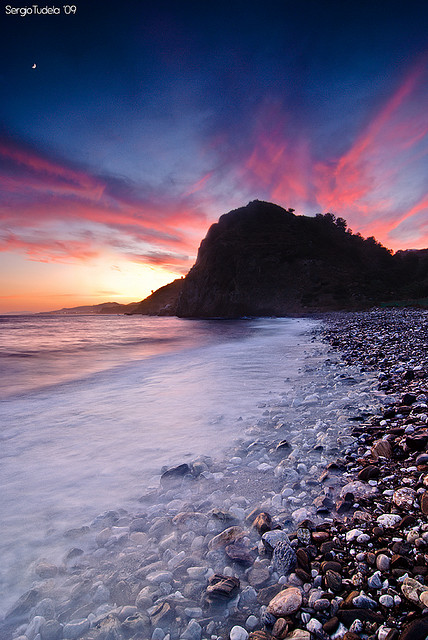
Used under Creative Commons Licence 3.0
Some rights reserved by Sergio Tudela

A few weeks ago, I posted about various sources for royalty free images on the internet.  These images can be used freely, without payment of royalties, for various projects such as blogs, civic newsletters and even your child's homework, and their use does not violate any copyright laws.

Some of the images may even be used for commercial purposes.

Here are four additional internet resources for royalty free images:

Flikr (click here) is the largest storage site for photos on the web.  Millions of these photos are licensed for Creative Commons use, including some for commercial use.  Along the top headings on the Flickr site, go to Explore, then on the drop-down menu click on Creative Commons.  Conduct your search, and just make sure to give the proper attribution on the photo. 


Example of royalty free image.  Creative Commons 3.0 - some rights reserved by pfarrell95
Compfight (click here) is a great search engine for royalty free images.   Many of its images come from Flikr, but it is not associated with the photo storage site.  On the left column, Compfight gives you the ability to search for Creative Commons images (royalty free for non-commercial purposes, with attribution), or "Commercial" for images that can be used for commercial purposes.  And if you blog or have a website with Wordpress, Compfight is even better.  There is a plug in that allows you to use the Compfight search engine directly from Wordpress.


Photo Pin (click here) is another great search engine for blog photos, or even images for commercial use.  It is very easy to use, gives you options on how to display your results, and gives you a multitude of options on the size image to download.  Photo Pin requires that you copy and paste the link to the photo in the credit line.

Photo from Photo Pin - see link below


Royalty free Halloween artwork from Open Clip Art


Open Clip Art (click here) is a totally free site of clip art images.  The images here may be used for any purpose, including commercial use.


Link to Photo Pin photo:
<a href="http://www.flickr.com/photos/stuckincustoms/440698504/">Stuck in Customs</a> via <a href="http://photopin.com">photopin</a> <a href="http://creativecommons.org/licenses/by-nc-sa/2.0/">cc</a>


Wednesday, September 5, 2012

Where to Find Free Photos for Your Blog -- and Even for Commercial Use

As writers, we are all sensitive (or should be) to copyright and the intellectual property rights of others.  But what do you do for illustrations for your blog?  Or for your kid's homework project?

I make great use of Istockphoto.com.  It has a vast array of images available in different sizes at very reasonable costs. For small size images used for non-commercial purposes (a blog, for example), the price ranges from as low as $1 to maybe $5.  For larger resolution of the same image, you may pay $4-10.

But there are other sources for licensed images, many of them free. 
Photo:  Flkr via Google.  Free for all uses, including commercial use.
There is  a wonderful compilation of these resources for free licensed media:  Your Guide to Finding Free Creative Images and Other Media Online (click here).  The web article is posted on WonderHowTo.com.

This is not just a listing, but also explains the various licenses and how to both post photos and use photos from those various resources.

For me, the best source seems to be Google.  Go to advanced search (there's a link at the bottom of your search results page).  The last line on the bottom of the advanced search page is "Usage rights."  Its default is "not filtered by license."  But you can change this by clicking on the drop down menu and chosing from:
  1.  "free to use or share," 
  2.  "free to use or share, even commercially," 
  3.  "free to use, share or modify," and 
  4. "free to use, share of modify, even commercially."
Another example of artwork available for free use or sharing through Google

If you have any need for images to highlight your blog, spruce up your civic club newsletter, or give a little assist to your child's homework project, you should check this out.

Image through Wikimedia, licensed under Creative Commons Attribution-NonCommercial 2.0 license